02 / Who We Are · Shaped by Experience
Built on operational experience, not theory.
Standing in the gap when crisis creates opportunity for exploitation. By, with, and through the community, against those who prey on it.
Standing in the gap when crisis creates opportunity for exploitation. By, with, and through the community, against those who prey on it.
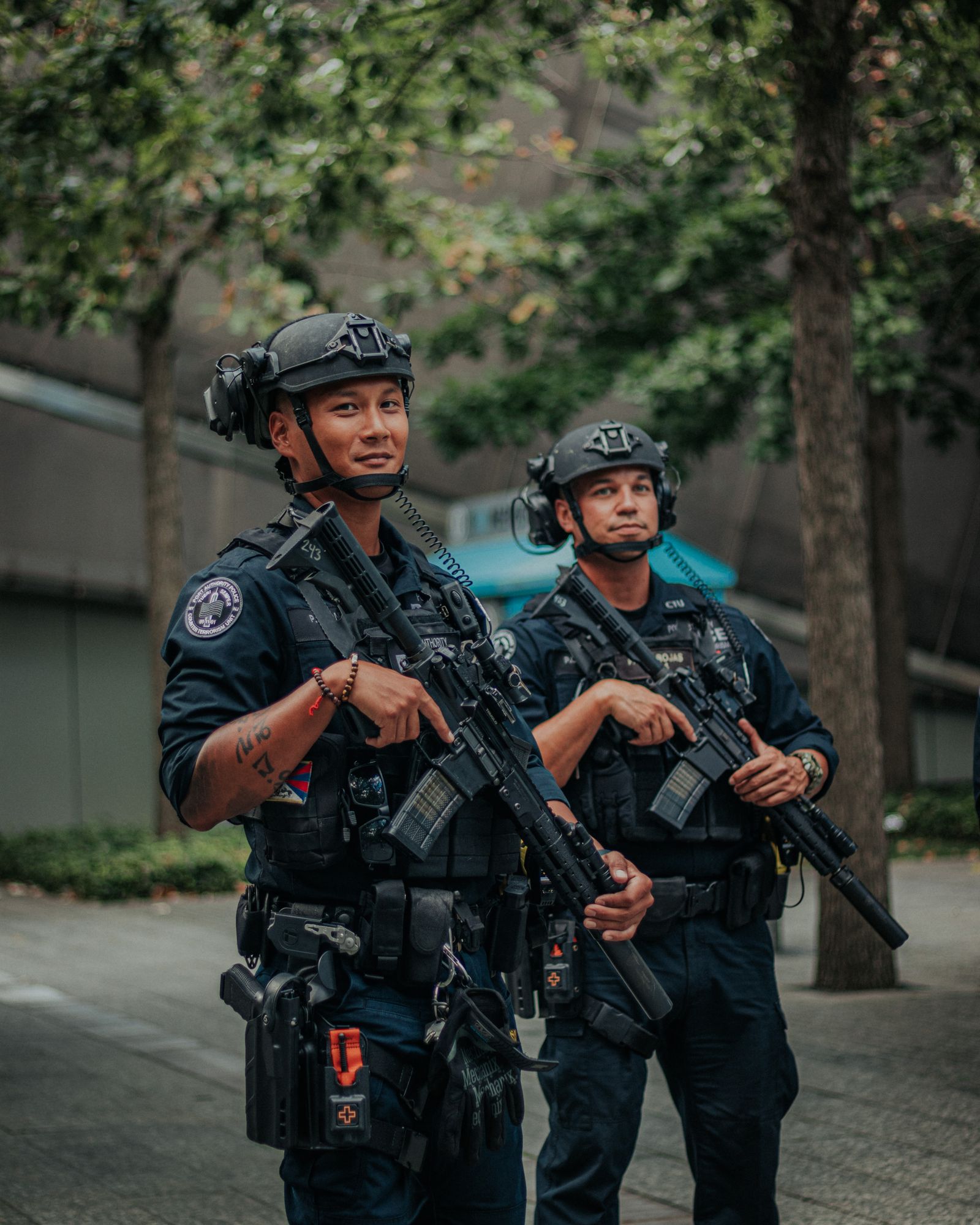
Millstone was founded by professionals with backgrounds in military special operations, public safety, anti-trafficking support, and complex operational environments. They have seen firsthand how exploitation expands when the systems meant to catch it are unprepared.
Human trafficking thrives where systems are weak, awareness is low, and predators believe they can operate without consequence. It grows in the seams between agencies and the blind spots of communities, in moments when pressure or instability reduce the ability to detect and stop it. Traffickers exploit those gaps and go wherever vulnerability can be turned into profit.
Every capability on that list comes from work our people have actually done in the field.
Millstone is a direct-action anti-trafficking organization built on a train, advise, and assist model. We equip and support partner organizations, agencies, and communities to identify trafficking risk, strengthen capability, and build the operational depth needed to confront exploitation before it spreads unchecked. We do this through:
Plenty of capable organizations already work this ground. Our job is to reinforce them and help build what it takes to counter trafficking in the real world.
Transparent operations, funding that maps clearly to mission capability, and growth tied to real operational need.
Safeguarding · Code of Conduct / Anti-Trafficking · Whistleblower protections · Privacy · Conflict of Interest
Trafficking does not happen in isolation. It intersects with crisis, instability, disaster, crime, infrastructure stress, and breakdowns in coordination. We operate within the established preparedness and incident-management systems used by public safety agencies across the United States, following the all-hazards, all-crimes, whole-community approach advanced by FEMA — so our efforts fit into existing operations rather than disrupt them.
We support jurisdictions and partner organizations in applying Threat and Hazard Identification and Risk Assessment processes with specific attention to trafficking-related vulnerabilities. Agencies catch capability gaps before they become operational failures, and treat trafficking risk as part of planning and analysis rather than an afterthought.
When we work alongside established command structures, we operate within the Incident Command System so our support aligns with existing leadership and operational priorities — coordinating with incident leadership, scaling to fit the command framework in place, and augmenting operations without duplicating effort.
Our training, assessments, and preparedness efforts are consistent with principles from the Homeland Security Exercise and Evaluation Program. We plan around capability, measure outcomes, and use structured evaluation to build repeatable capability rather than one-time awareness.
Rather than introduce parallel structures, we make existing ones more effective. Because we understand how agencies plan, respond, and recover within national frameworks, we integrate quickly, support partners without adding friction, and help close the seams traffickers exploit.