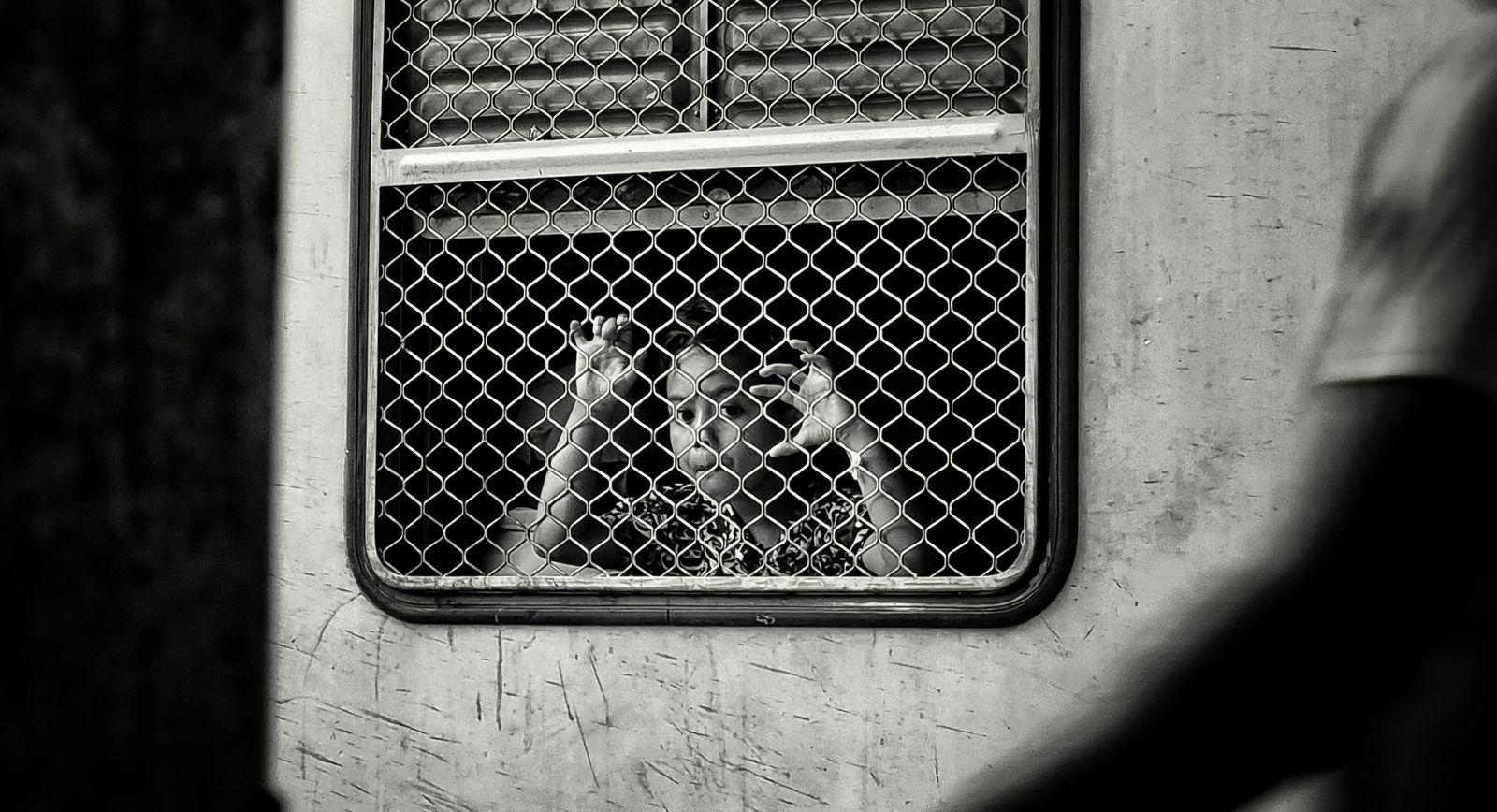
A child looking out through the meshed window of a train car
Briefing / Human Trafficking & Child Exploitation

What it is, how it works, and why it persists.

When people hear “human trafficking,” they usually picture one kind of crime with one kind of victim. The evidence shows something else: a broad, networked system of exploitation, built on controlling people in order to exploit them.

The system

A broad system of exploitation.

Human trafficking can involve commercial sex, forced labor, forced criminality, forced begging, domestic servitude, and, in some circumstances, trafficking for the purpose of organ removal. It can cross borders and can involve movement, but the law requires neither.

Children are not trafficked only into one form of abuse. A child may be groomed online, exploited for commercial sex, coerced into producing sexual images, threatened into further compliance, moved between locations, used for labor, or exploited in more than one way over time. Official law enforcement and international sources increasingly describe trafficking and child exploitation as networked and adaptive, taking many forms at once, especially where digital tools lower the cost of recruitment, coercion, payment, and distribution.
What It Is — and What It Is Not

Under U.S. federal law, human trafficking is a crime involving the exploitation of a person for labor, services, or commercial sex. The DOJ states the two primary forms are sex trafficking and labor trafficking. The FBI adds an especially important rule for children: when a minor is induced to engage in a commercial sex act, force, fraud, or coercion does not need to be proven for the conduct to qualify as sex trafficking under federal law.

Trafficking ≠ Smuggling

DHS is explicit: smuggling is the illegal movement of a person across a border; trafficking is the illegal exploitation of a person. A person can be trafficked in their own city, by someone they know, without crossing any border, and without being physically locked up. Control can be exercised through threats, debt, emotional dependency, addiction, blackmail, document confiscation, fear of law enforcement, family pressure, online coercion, or economic desperation.

The United States

Nationwide, not isolated.

The FBI states that human trafficking occurs in every region of the United States, and that each of the Bureau’s 56 field offices has received complaints involving human trafficking, with more than 1,660 pending human-trafficking investigations. The FBI’s Crimes Against Children programs are active across all 56 field offices, and child-exploitation investigations routinely involve coordination with state, local, tribal, territorial, and international partners.

The Office for Victims of Crime reports that, from October 2023 through September 2024, 288 OVC human-trafficking grantees provided services to an average of 10,505 clients per quarter.

Children at the Center

Children are one of this crime’s central targets, not a side category. UNODC’s 2024 global findings reported a 31% increase in detected child trafficking victims in 2022 compared with 2019, with a 38% rise for girls. In several regions, children now account for the majority of detected victims.

INTERPOL emphasizes that images found online are not “virtual abstractions”: they represent real children and real abuse. Children are targeted partly because of sexual demand and partly because they are easier to manipulate, isolate, and control.

Grooming → Control → Exploitation → Re-exploitation.

The Online Dimension

Social media, messaging, games, AI, and the dark web.

Online child exploitation is an ecosystem of risks rather than a single crime. Contact often starts on a mainstream platform, moves to private messaging, escalates to coercion or image exchange, and then shifts into extortion, trafficking, or wider distribution.

Social Media & Direct Messaging

The FBI says sextortion often begins when offenders pose as peers or attractive contacts, build trust quickly, then push for explicit images. Once they obtain material, they threaten to share it unless the child sends more images, performs live acts, or pays money. Official guidance treats these cases as coercive and highly dangerous, not as adolescent mistakes.

Online Games

IC3 has warned that online gaming environments can be used by predators because communication features create openings for grooming, trust-building, secrecy, and migration to other platforms. That does not make games uniquely dangerous — it means any platform where children communicate can be misused when safeguards and supervision are weak.

AI-Enabled Abuse

The FBI warned in 2024 that child sexual abuse material created with generative AI is illegal under federal law when it falls within the prohibited categories of realistic computer-generated CSAM. AI can be used to create, alter, personalize, or multiply exploitative material, including material used to threaten children or to normalize demand among offenders.

Violent Online Communities

IC3 and Europol have both warned about violent online groups that target minors, pressure them into explicit acts and self-harm, and circulate the material for further control. These are not simply “bad chats”; they are coercive abuse environments that overlap with extortion and trafficking dynamics.

Dark-Web Markets & Payment Systems

The DOJ, FBI, Europol, and INTERPOL have documented dark-web child exploitation platforms monetized through cryptocurrency, advertising, or subscription-style access. The online environment lowers the cost of approach, deception, coercion, payment, storage, distribution, and repeat victimization — turning local abuse into a transnational problem.

Setting the Record Straight

Myths that distort public understanding.

False

Myth 1: Trafficking requires movement across borders.

DHS and the State Department both state that trafficking does not require crossing a border, and does not require movement at all.

False

Myth 2: If a victim was not kidnapped, it is probably not trafficking.

Control can be psychological, financial, relational, or digital. Trafficking often relies on coercion, dependency, deception, or abuse of vulnerability rather than abduction.

False

Myth 3: Child trafficking is only a runaway or prostitution problem.

Official sources define child sex trafficking more broadly and recognize online exploitation, coercive image production, and labor exploitation. The law does not require proof of force, fraud, or coercion when a minor is induced into a commercial sex act.

False

Myth 4: Trafficking is mainly a foreign-country problem.

The FBI says trafficking occurs in every region of the United States, and Canada and Mexico both maintain national anti-trafficking frameworks because the problem is domestic as well as transnational.

False

Myth 5: Online exploitation is separate from trafficking.

Not every online abuse case is trafficking, but official sources increasingly show overlap among grooming, sextortion, image-based coercion, commercial exploitation, live-abuse markets, and broader trafficking systems.

Incomplete

Myth 6: The crime persists because a handful of offenders are simply depraved.

Some offenders are sexually driven, some financially driven, and many systems involve both. The ILO’s profit estimates show why trafficking is also a market crime, not just a moral failure at the individual level.

Who Faces Greater Risk

Risk is not random. It rises where protection is weak.

Official sources do not support the idea that trafficking affects only one demographic. Victims can be any age, sex, nationality, ethnicity, or economic background. At the same time, risk is not random; it rises where protection is weak and control is easier.

That includes children, migrant populations, people in poverty, people facing housing instability, people with prior abuse histories, people with disabilities, children online without adequate safeguards, and people cut off from trusted support systems. The U.S. government has also recognized trafficking concerns in tribal and Indigenous communities, tying efforts on missing and murdered Indigenous persons to the trafficking crisis affecting American Indian and Alaska Native communities. These are examples of the same pattern, not separate issues: where vulnerability and invisibility increase, exploitation gets easier.

What the Public Needs to Understand

Human trafficking and child exploitation are overlapping systems of coercion, abuse, and profit rather than one crime with one face. In the United States the problem is nationwide. Across North America it is regional and connected, and globally it is adaptive and increasingly diversified across sexual exploitation, labor exploitation, forced criminality, and digital abuse.

The crime persists because exploitation is profitable, detection is incomplete, victims are often silenced or controlled, and digital tools reduce the cost of recruitment, coercion, and distribution. The ILO estimates that 27.6 million people are in forced labor globally and that forced labor generates US$236 billion in illegal profits annually. It cannot be treated as a narrow criminal niche; it touches public safety, child protection, organized crime, digital abuse, labor exploitation, corruption, and institutional resilience.

Official Reporting & Help Channels

If there is immediate danger, call emergency services first.

United States

Report suspected trafficking to federal law enforcement through DHS / HSI.

1-866-347-2423

National Human Trafficking Hotline (victim help).

1-888-373-7888

Online exploitation, sextortion, or cyber-enabled abuse: the FBI’s IC3, plus tips.fbi.gov and local FBI field offices.

Canada

Public Safety Canada directs the public to the Canadian Human Trafficking Hotline.

1-833-900-1010

Mexico

Federal reporting through the Fiscalía General de la República.

800-00-85-400 · 088

International Cooperation

INTERPOL supports international policing through databases, notices, and its International Child Sexual Exploitation (ICSE) database. Europol supports multi-country operations on trafficking and child sexual exploitation across the EU and beyond.

Sources include the U.S. Department of Justice, Department of Homeland Security (Blue Campaign / Center for Countering Human Trafficking), Federal Bureau of Investigation and IC3, Office for Victims of Crime, U.S. Department of State, Public Safety Canada, the Government of Mexico (FGR), the United Nations Office on Drugs and Crime (2024 Global Report on Trafficking in Persons), the International Labour Organization (Profits and Poverty, 2024), INTERPOL, and Europol. Model-based estimates are identified as estimates; case figures reflect detected cases and are subject to under-detection.

Close the Gap

Real crimes against real children, often repeated long after the first act.